
Poodle Grooming Guide
Maintaining Your Poodle's Coat at Home and with Professionals
Poodles have a unique coat that requires regular maintenance. Unlike most breeds, poodles have hair rather than fur, it grows continuously and does not shed seasonally. This means your poodle needs consistent brushing proper at-home care and possibly regular professional grooming to stay comfortable and healthy.
This guide covers the basics of poodle coat care, including what you can do at home between professional appointments, what tools you need to do it yourself, and how to recognize when professional help is necessary.
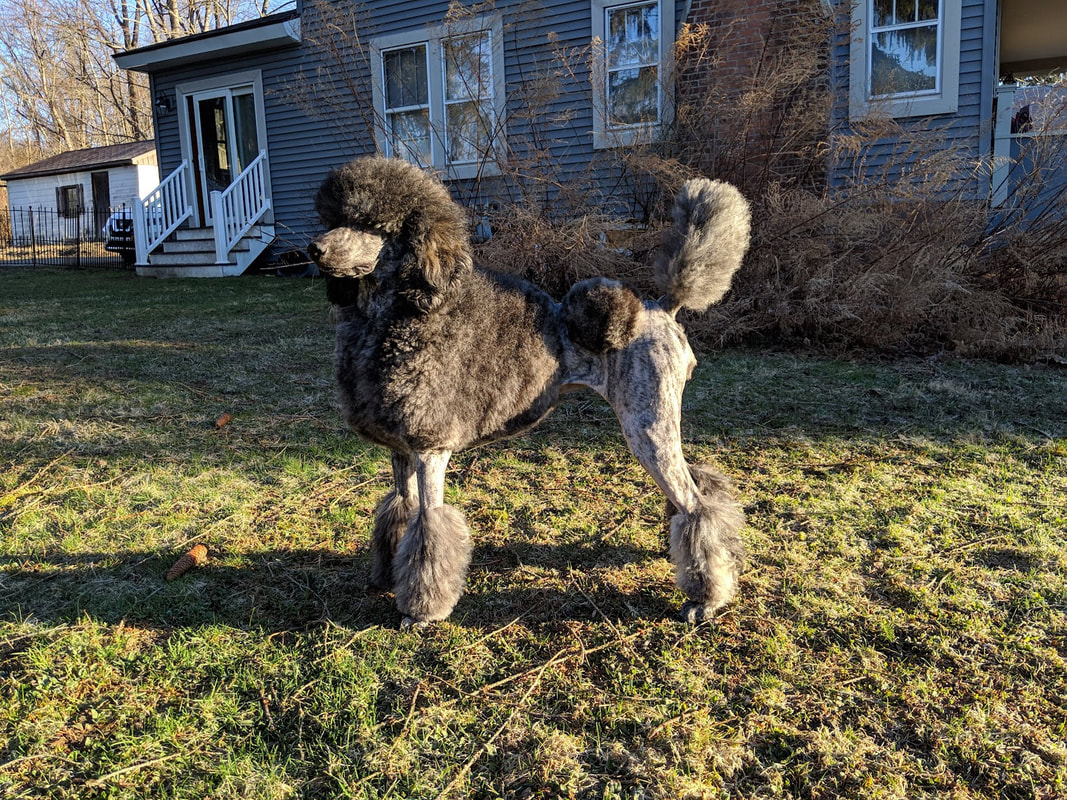
Grooming Basics: What You Need to Know
▼Poodle coats are high-maintenance by design.This unique coat developed for a purpose—learn why in our Breed Heritage guide. The same qualities that make poodles low-shedding—their continuously growing, tightly-curled hair—also make them prone to matting if not brushed regularly. A matted coat causes discomfort, restricts movement, traps moisture against the skin, and can lead to skin infections.
Brushing Frequency: Adult poodles in a longer coat need brushing at least three to four times per week. Puppies and dogs in shorter clips can often go longer between brushing sessions, but all poodles benefit from regular brushing to distribute skin oils and check for skin issues.
Professional Grooming: Most poodle owners take their dogs to a professional groomer every 4-8 weeks. The frequency depends on the length of coat you maintain, how much grooming you do at home, and how quickly your dog's coat grows. Many may prefer to let professional groomers handle all clipping, scissoring, nail trimming, ear cleaning. IN that case you should go at least every 4 weeks.
Between-Grooming Maintenance: Even with regular professional appointments, you will need to comb through your poodle at home, keep their face and feet clean, monitor their ears, and trim nails if they grow faster than the grooming schedule allows. Some owners learn to do full grooms at home, and I fully recommend this. Even if you learn and end up preferring the groomer to do the work, you now have the skills if necessary.
The key to successful poodle coat care is consistency. Letting grooming slide for even a few weeks can result in mats that are difficult or impossible to brush out, requiring a full shave-down to start over. Prevention through regular brushing is always easier than dealing with a severely matted coat.
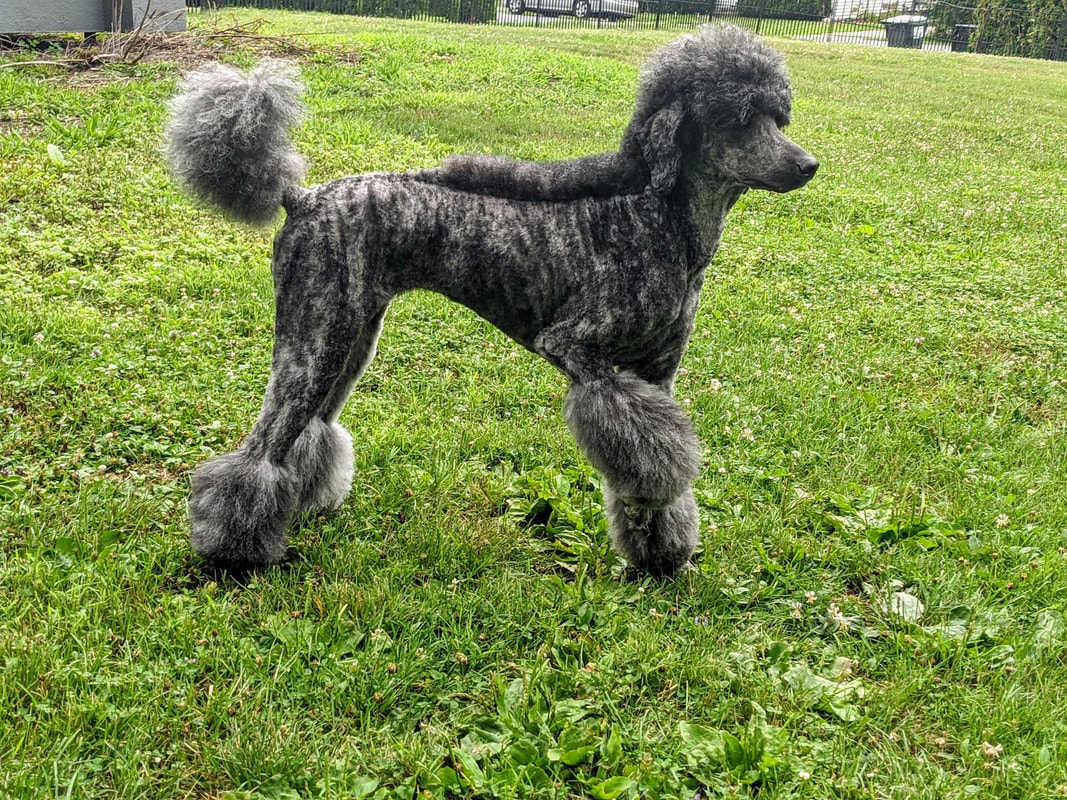
Basic Home Grooming Tools
▼Long tooth metal Comb: A metal greyhound comb or similar wide-tooth/fine-tooth combination comb is essential for checking your brushing work. Brush all the way down to the skin, working in sections, and brush against the direction of hair growth to ensure you reach the undercoat. If the comb glides smoothly through the coat after, you have done a thorough job. If it catches, you have mats forming.
Detangling Spray: A leave-in conditioning spray makes brushing easier and helps prevent breakage. Spray lightly before brushing, particularly in areas prone to matting like behind the ears, under the legs, and around the collar area.
Nail Clippers or Grinder: Regular nail trimming prevents overgrowth that can cause discomfort and gait problems. Choose either guillotine-style clippers or a nail grinder based on what you and your dog tolerate best.
Ear Cleaning Solution: Poodles need regular ear cleaning because hair grows inside their ear canals, trapping moisture and debris. Use a veterinarian-recommended ear cleaning solution and cotton balls or gauze—never cotton swabs, which can push debris deeper.
Scissors (Optional): Blunt-tip scissors are useful for trimming around the eyes, pads of the feet, and sanitary areas between professional grooming appointments. Be extremely careful when using scissors near your dog's face and feet.
 |
 |
Equipment For doing full Home Grooming
▼If you want to learn to groom your poodle at home, you will need good equipment. Home grooming requires investment in tools, training, and practice, but it will save you a lot of money long-term and allows you to maintain your dog's coat on your own schedule.
Clippers: Professional dog clippers designed for continuous use. Look for clippers specifically rated for thick, curly coats. Clippers marketed for home use often overheat or lack the power needed for poodle coats. Budget for high-quality clippers—cheap clippers will frustrate you and potentially hurt your dog. Andis and Wahl both have many corded and non-corded options
Clipper Blades: Multiple blade sizes for different coat lengths. Common blade sizes for poodles include #10 (short), #7F (medium), #5F (longer), and #4F (longest). Some clippers, like the Wahl Bravura, have adjustable blades,so you can cut at various lengths with the same blade. I highly recommend the Bravura, it is cordless, user friendly and great for a starter. It is still my go to clippers for the basics. No matter what clipper you use, blades must be kept sharp and oiled. Dull blades pull hair instead of cutting it, causing discomfort.
Grooming Shears: Straight shears, curved shears, and thinning shears for scissor work on the topknot, tail, and legs. Quality shears are expensive but make a significant difference in the finish. Cheap shears create choppy, uneven lines.
Grooming Table: A sturdy table with a non-slip surface and grooming arm. The table should be at a comfortable working height to prevent back strain. The grooming arm and loop keep your dog safely positioned while you work.
High-Velocity Dryer: A force dryer that blows water out of the coat while straightening the hair. This is essential for poodles—allowing a poodle to air-dry results in a tangled, matted coat. Force dryers are loud and can be expensive, but they are not optional for poodle grooming.They come in a variety of price points, I have links to a few options here---
Learning to groom your poodle takes time, patience, and is way easier with formal instruction. Consider taking grooming classes, watching instructional videos, and practicing on a willing dog before attempting complex clips. Everyone should start with basics and gradually build skills.
My Recommendation for Grooming Lessons
Becky Godbey
▼Magic Hour Poodles
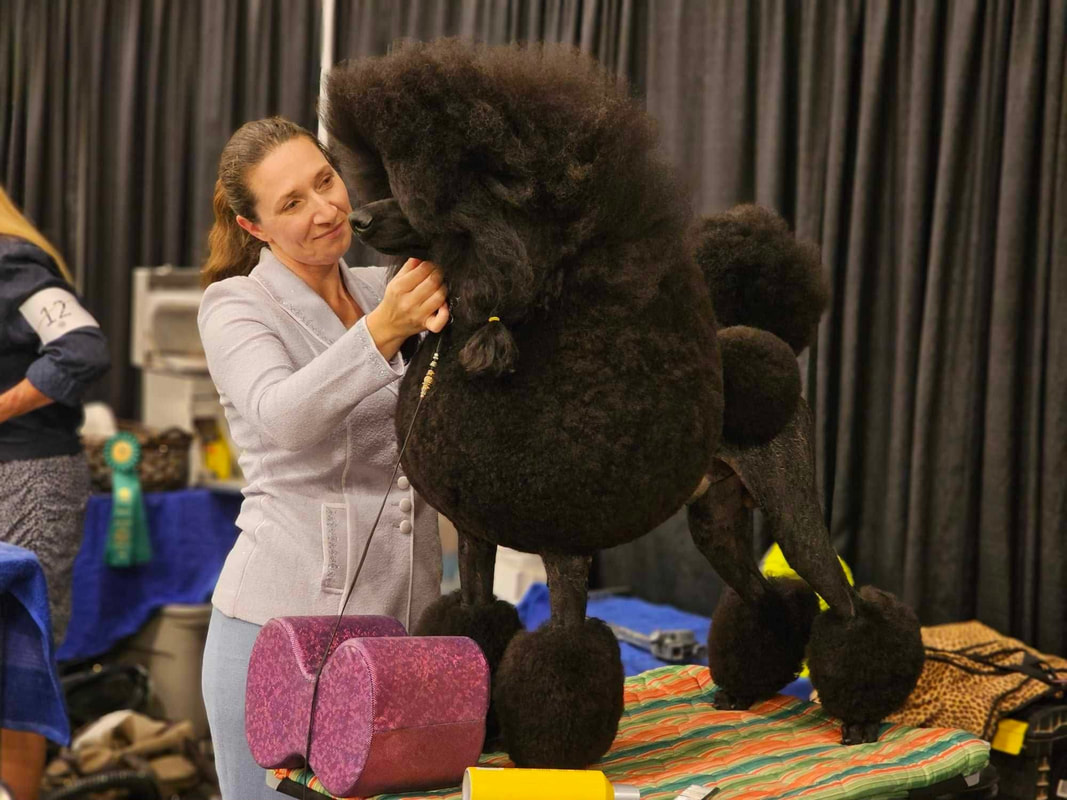
Becky has been owner-handling standard poodles since 2008 and has titled many AKC champions. She offers virtual one-on-one coaching sessions where she teaches you exactly how to groom, maintain, and show your poodle—using her own dogs for hands-on demonstrations while watching and correcting you in real time.
"Becky is phenomenal both as a person and as an instructor. She's patient, encouraging, and genuinely passionate about helping poodle owners succeed—whether you're preparing for the show ring or just want to maintain your dog's coat at home. I can't recommend her highly enough."
What She Offers
- Monthly Membership ($42.40/mo): Exclusive videos, live seminars, one included 1-on-1 session, unlimited access to pre-recorded lessons
- Additional 1-on-1 Sessions: $40 for members, $80 for non-members
- Video Call Format: Live instruction with real-time feedback as you work on your own poodle
Join Magic Hour Poodle Coach →
Grooming Specific Areas
▼Ears: Poodles have hair growing inside their ear canals, which traps moisture, wax, and debris. Check ears weekly. Healthy ears should be pink with minimal odor. Clean with veterinarian-approved ear cleaner and cotton balls—never use cotton swabs. Some groomers pluck ear hair; others prefer to leave it. Discuss with your groomer and vet to determine the best approach for your dog.
Eyes: Poodles can develop tear staining, particularly in lighter-colored dogs. Wipe around the eyes daily with a damp cloth or eye wipe to remove discharge before it dries and stains. Hair around the eyes should be trimmed to prevent irritation. If your dog has excessive tearing, consult your veterinarian—it may indicate blocked tear ducts or other issues.
Feet: Hair grows between the pads of poodle feet and must be trimmed regularly. Overgrown foot hair collects debris, causes slipping on smooth floors, and can mat painfully between the toes. Check between toes for foreign objects, cuts, or irritation during regular grooming.
Sanitary Areas: Sanitary hair should be kept short for cleanliness. This area mats easily and can trap feces and urine, causing skin irritation and infection. Routinely clip sanitary areas short
Nails: Overgrown nails cause discomfort and can alter your dog's gait, leading to joint problems. Nails should be trimmed every 2-4 weeks, depending on how fast they grow and how much your dog walks on hard surfaces. If you hear clicking when your dog walks on hard floors, the nails are too long.
Warning Signs: When to Seek Professional Help
▼While regular at-home grooming prevents many problems, certain signs indicate your poodle needs immediate professional attention from either a groomer or veterinarian. Do not attempt to handle these situations on your own.
Ear Infection Symptoms (Very Common in Poodles)
Seek veterinary care if you notice: Foul odor from the ears, discharge of any kind (runny, thick, pus, or blood), redness or swelling inside the ear, brown crusty material in the ear, excessive head shaking or tilting, pawing or rubbing at the ears, loss of balance or dizziness, or crying when the head is touched.
Ear infections can progress quickly and cause permanent damage if left untreated. Do not attempt home remedies if you see pus or signs of severe infection.
Severe Matting
Seek professional groomer help if: Mats are tight to the skin and cannot be brushed out, mats cover large areas of the body, skin appears red or irritated under mats, or your dog shows pain when you attempt to brush.
Severely matted coats trap moisture against the skin, restrict movement, and hide skin infections or hot spots. Professional groomers have the tools and expertise to safely remove mats. In extreme cases, a full shave-down may be necessary. Do not attempt to cut out mats with scissors—you risk cutting your dog's skin.
Skin Issues
Seek veterinary care if you notice: Hot spots (red, moist, painful areas that appear suddenly and may ooze or smell), areas of hair loss, red bumps or pustules on the skin, excessive scratching or licking at one area, crusty or scabby patches, areas that appear swollen or inflamed, or a dull, greasy coat with flaking skin.
Hot spots, folliculitis (inflamed hair follicles), sebaceous adenitis (immune-mediated skin disease), and allergic dermatitis can all occur. These conditions require veterinary diagnosis and treatment. Skin problems hidden under a matted coat can become severe before being discovered.
Eye Problems
Seek veterinary care if: Eyes appear red, swollen, or painful, discharge is thick, green, or yellow (rather than clear tears), excessive tearing persists despite regular cleaning, your dog squints or keeps an eye closed, or cloudiness appears in the eye.
While tear staining is common and cosmetic, sudden changes in eye discharge or appearance can indicate infection, blocked tear ducts, or eye injury requiring treatment.
Nail Overgrowth
Seek professional help if: Nails are so long they curl into the pad, nails bleed when you attempt to trim them, your dog limps or shows pain when walking, or you are afraid to trim the nails yourself.
Severely overgrown nails can grow into the paw pads, causing infection and pain. Professional groomers and veterinarians can safely trim overgrown nails and show you proper technique for maintenance.
When in doubt, consult a professional. It is always better to seek help early than to wait until a minor problem becomes a major health issue. Your veterinarian and professional groomer are partners in your poodle's health and can provide guidance specific to your dog's needs.
Video Resources
▼Video tutorials can be invaluable for learning grooming techniques. These resources cover various aspects of poodle grooming, from basic brushing to advanced clipping. Links will be added as resources are identified.
How to Brush a Poodle Properly
Demonstration of line brushing technique, working in sections from skin to tip to prevent mats.
Poodle Ear Cleaning and Hair Plucking
Step-by-step guide to cleaning poodle ears and safely plucking ear hair to prevent infections.
Trimming Poodle Feet and Sanitary Areas
Safe techniques for trimming hair between paw pads and around sanitary areas for cleanliness.
Introduction to Poodle Clipping
Beginner-friendly overview of clipper use, blade sizes, and basic poodle clip patterns.
Using a Force Dryer on Poodles
Proper technique for using a high-velocity dryer to dry and straighten poodle coat after bathing.
Want more than videos? For live, one-on-one instruction where someone watches and corrects you in real time, check out my recommended grooming coach.
See My Recommendation for Grooming Lessons ↑
 |
 |
Finding a Good Professional Groomer
▼A skilled professional groomer is an important partner in maintaining your poodle's health and appearance. The right groomer will handle your dog gently, communicate clearly, and produce consistent results. The wrong groomer can cause physical harm, emotional trauma, or damage your dog's coat.
What to Look For
Experience with Poodles: Ask how many poodles the groomer works with regularly. Poodle coats require specific techniques and knowledge. A groomer who primarily works with short-coated breeds may not have the skills needed for poodle grooming.
Clean, Safe Facility: The grooming space should be clean, well-ventilated, and organized. Equipment should appear well-maintained. Dogs should be secured safely on grooming tables and never left unattended in situations where they could be harmed.
Good Communication: The groomer should ask questions about your preferences, listen to your concerns, and explain what they plan to do. They should be willing to show you photos of different clip styles and discuss what will work best for your dog's coat and lifestyle.
Calm, Confident Handling: Watch how the groomer interacts with dogs. They should be firm but gentle, calm, and confident. Dogs should appear comfortable in their presence, not fearful or aggressive.
Reasonable Pricing: Poodle grooming is labor-intensive and time-consuming. Extremely low prices may indicate rushed work, inexperienced groomers, or shortcuts that compromise quality or safety. Expect to pay more for a skilled groomer who takes their time.
Questions to Ask
Are you experienced with standard poodles specifically? How long does a full groom typically take? Do you hand-dry or cage-dry dogs? What happens if my dog becomes anxious or difficult to handle? Do you require current vaccination records? What is your cancellation policy?
A professional groomer should answer these questions readily and provide clear, detailed responses. Vague or defensive answers are a red flag.
Red Flags to Avoid
Cage Drying Poodles: Cage dryers blow hot air into a cage where the dog is confined. Reputable poodle groomers use force dryers or hand-dry dogs.
Refusal to Allow Visits: While you may not be able to stay during grooming (it can make some dogs more anxious), you should be able to tour the facility and meet the groomer before your first appointment. Groomers who refuse to let you see their workspace may have something to hide.
Reports of Injuries: Ask around. If multiple people report that their dogs came home with cuts, nicks, or clipper burn from a particular groomer, find someone else. Occasional accidents happen, but patterns of injury indicate poor technique or carelessness.
Lack of Vaccination Requirements: Professional groomers require proof of current rabies, distemper, and bordetella (kennel cough) vaccinations. This protects all dogs in the facility. Groomers who do not require vaccination records are not following basic safety protocols.
Inconsistent Results: Your dog should look consistently well-groomed after each appointment. If results vary wildly—one appointment looks great, the next looks hacked—the groomer lacks skill or is rushing through appointments.
Finding the right groomer may take time. Schedule a consultation before booking a full groom. Bring your dog to meet the groomer and assess how they interact. Trust your instincts. If something feels off, keep looking. A good groomer is worth the search.
Grooming Is Part of Poodle Ownership
▼Regular grooming is not optional for poodles—it is a fundamental part of responsible ownership. Whether you choose to learn to groom at home or rely on professional services, consistency is essential.
Every Pantheon puppy goes home with a grooming guide and lifetime breeder support for grooming questions and concerns.